
6/12/2026 - 6/12/2026
Date: December 6, 2026 (Sunday)
Time: 2:00 PM - 3:30 PM
Venue: 2/F Hall
Facilitator: Dr. Zachary Leung
Format: Lecture and Q&A
Who Is It For:
Anyone (Christian or non-Christian) interested in verifying the historical events around Jesus and His teachings.
Description:
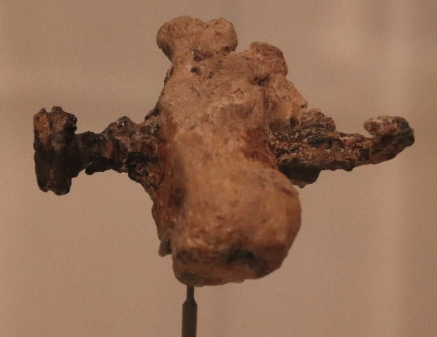
For generations, skeptics have claimed that people, places, and events described in the Bible were myths. These skeptics take the “absence of evidence” as the “evidence of absence.” Yet archaeology has repeatedly uncovered evidence confirming the Bible's historical setting, especially the historical setting in which Jesus lived on planet Earth.
From the discovery of the Pilate Stone and the Dead Sea Scrolls to the Caiaphas Ossuary and the Pool of Siloam, archaeology has verified not only the people and events recorded in the Bible, but also the authenticity and reliability of both the Old and New Testaments. With advances in technology, today’s radiocarbon dating technology nails down the timing of the Biblical events more precisely than ever before.
This seminar explores archaeological discoveries connected to Jesus’ time and beyond. If events uncovered by archaeology match the events described in the Bible, should we be even more confident in Jesus' birth, life, death, and resurrection?
Facilitator Bio:
Zachary Leung (PhD, MIT) is passionate about big data for the Christian faith. He sees the Christian faith as well-supported by seven types of big data: The Bible, theology, history, archaeology, sciences, philosophy, and personal experience. He is especially interested in the harmony between science and the Christian faith.
Zachary is currently a scholar at Reasons to Believe, drawing the data-minded to the Gospel. He has been a university professor, research scientist, corporate director, and entrepreneur, all in artificial intelligence for 30+ years. He received his MS and PhD from the Massachusetts Institute of Technology. He also earned his MA from Biola University's Talbot School of Theology, specializing in apologetics and the relationship between science and theology.
For inquiries, please contact